
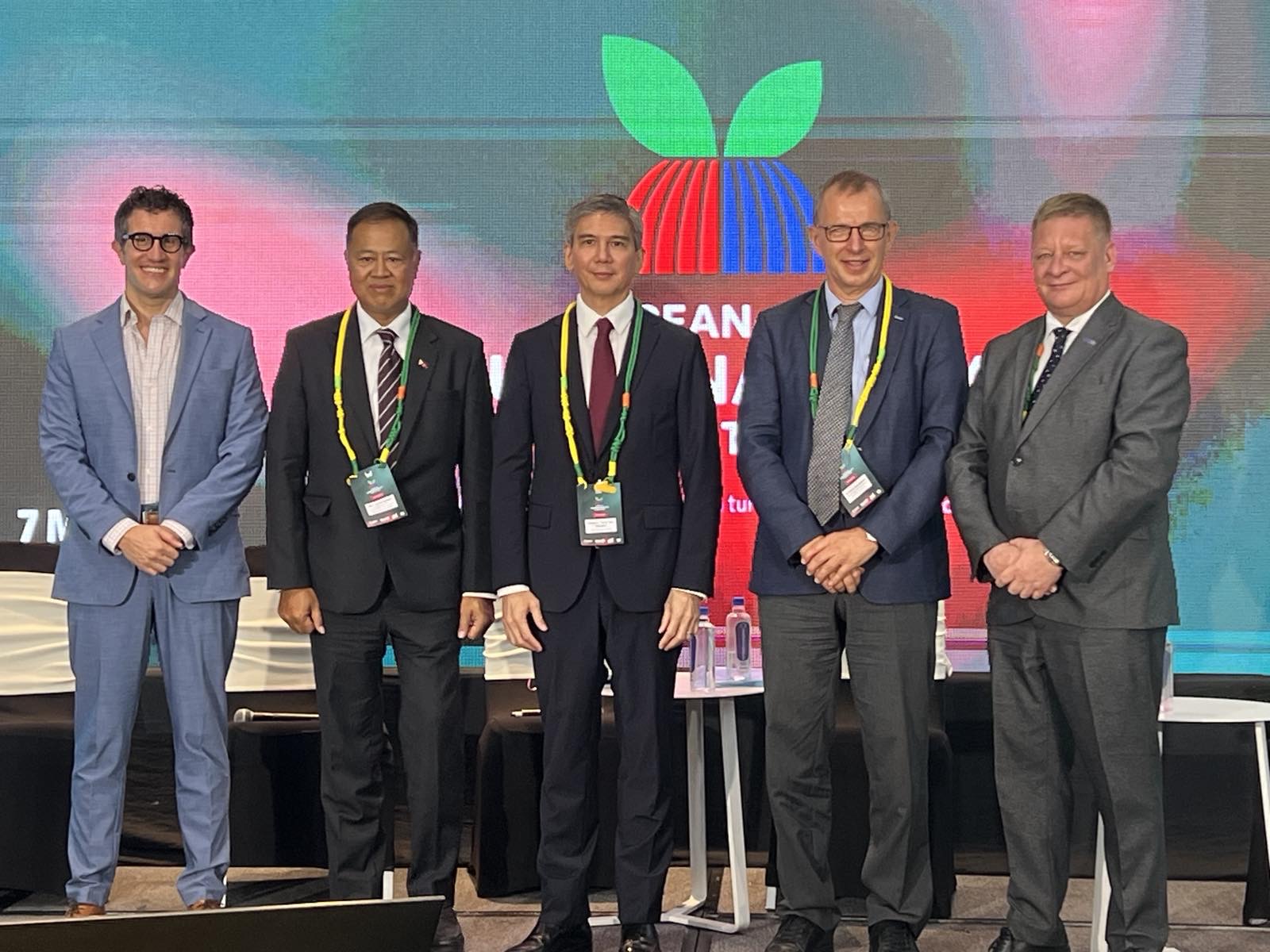
[L-R] Rob Kaplan, Founder and CEO of Circulate Capital; Hon. Jonas Leones, Undersecretary of the Department of Environment and Natural Resources (DENR); Antonio “Tony” Del Rosario, President of Coca-Cola Philippines; Dr. René van Berkel, Co-Convenor of the ASEAN Circular Economy Business Alliance; and Chris Humphrey, Executive Director of the EU-ASEAN Business Council, during the panel discussion at the summit.
Organized by the EU-ASEAN Business Council (EU-ABC) and the European Chamber of Commerce of the Philippines (ECCP) in support of the Philippines’ ASEAN Chairmanship, the summit brought together representatives from the public and private sectors to exchange insights on policy coordination, implementation strategies, and creating an enabling environment for sustainable investments.
Throughout the summit, speakers stressed that the success of Extended Producer Responsibility (EPR) initiatives relies on consistent implementation, supportive investment policies, political stability, cross-border collaboration, and knowledge exchange—particularly as ASEAN countries vary in the maturity of their waste management and recycling infrastructure.
As a total beverage company, Coca-Cola shared several considerations for effective EPR systems and to maximize compliance models, including: clear and enforceable regulatory EPR system design; alignment with local collection and recycling infrastructure; inclusion of informal waste workers within recycling value chain and recovery systems; and stronger incentives that support recycled material use and infrastructure investment across the region.
Antonio “Tony” Del Rosario, president of Coca-Cola Philippines, joined fellow panelists from government, ASEAN institutions, and civil society to discuss implementation challenges and lessons from early-stage EPR markets.
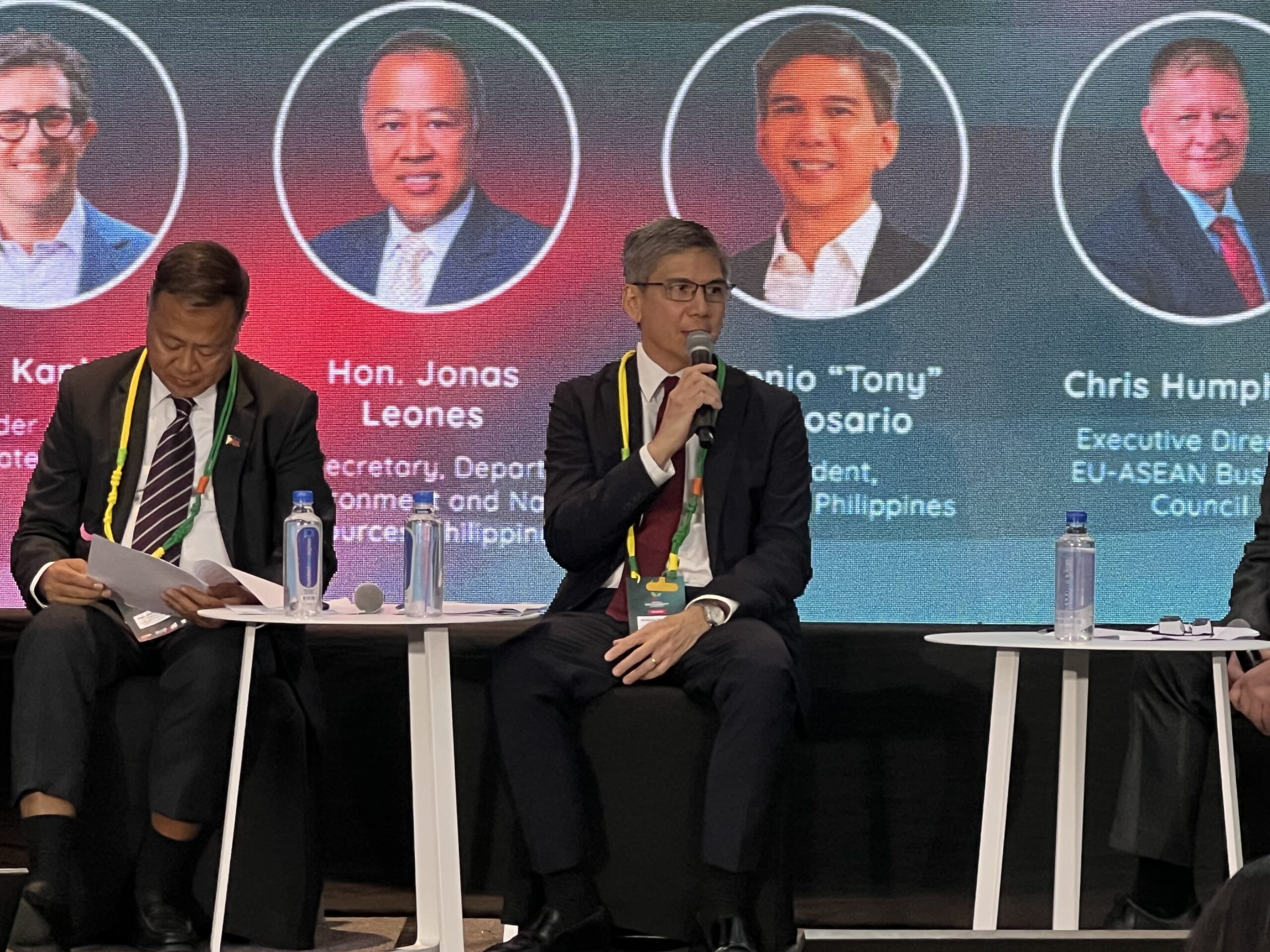
Antonio “Tony” Del Rosario, President of Coca-Cola Philippines, shares Coca-Cola’s perspectives on effective EPR implementation.
“EPR systems work best when design, enforcement, and on-the-ground realities are aligned,” Del Rosario said. “That requires coordination across government, industry, and waste management stakeholders.”
Discussions throughout the summit similarly underscored that successful EPR systems require coordinated action across governments, businesses, financial institutions, waste management stakeholders, and communities. Speakers also highlighted the importance of ensuring that frameworks remain practical and locally relevant, recognizing the differing levels of infrastructure and market maturity across ASEAN economies.
Coca-Cola Philippines referenced examples from its local experience supporting collection and recycling efforts locally. These include Tapon to Ipon, a collection initiative now operating through more than 6,000 community drop-off points nationwide, and partnerships focused on waste recovery and recycling infrastructure. The company also noted the role of its philanthropic arm, the Coca-Cola Foundation Philippines, in supporting programs that engage informal waste workers in the recycling value chain.
The company also cited PETValue Philippines, the country’s first bottle-to-bottle PET recycling facility established through a joint venture between Coca-Cola Europacific Aboitiz Philippines and Indorama Ventures, as an example of private sector investment contributing to domestic recycling capacity.
Speakers across the summit emphasized that EPR outcomes depend on consistent implementation, investment-enabling policies, political stability, knowledge-sharing and collaboration across markets, particularly given differences in infrastructure maturity across ASEAN economies.
Coca-Cola Philippines reaffirmed its commitment to working closely with government agencies, industry stakeholders, and community partners as EPR policies continue to develop across the region.
To learn more about the company’s sustainability efforts, visit the Coca-Cola Philippines Sustainability platform.
Learn more at Coca-Cola Philippines and follow Coca-Cola Philippines on social media.

No Comments